Calls
What calls are, how to define them, and how they connect to your data-fetching library.
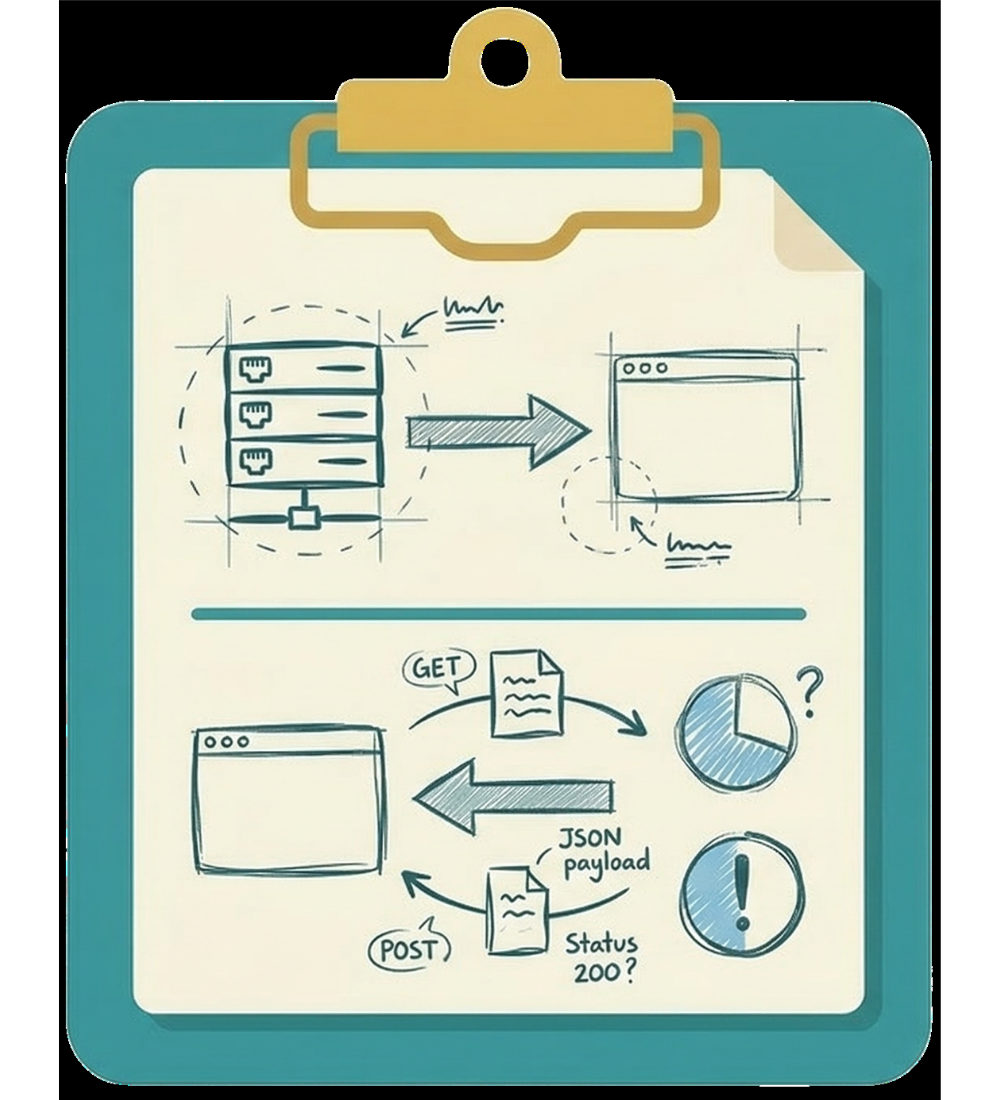
A call is the basic unit of organization in Callsheet. It represents an API operation, like a query or a mutation.
Callsheet gives those operations a consistent shape, so you can organize them, add shared defaults, and keep related behavior together.
How to think about Calls
On the surface, calls can look like extra indirection.
You could leave queries in one shared helper, mutations in another, and invalidation rules somewhere else. That works for a while, but related pieces tend to drift apart as an app grows. Calls give the app a clearer model for things like:
- What operations exist?
- Which reads and writes belong together?
- Where do shared defaults live?
- Where should cache invalidation rules be defined?
The Shared Call Surface
With a shared call surface, the rest of your app can reference calls through one consistent shape instead of a mix of helpers, hooks, and request files.
You use defineCalls(...) to create that shape:
export const calls = defineCalls({
  films: {
    featured: query(FeaturedFilmsDocument),
    byId: query(FilmByIdDocument),
    update: mutation(UpdateFilmDocument),
  },
});
Once defined, the rest of your app can reference calls like this:
calls.films.featured;
calls.films.byId;
calls.films.update;
This shared shape makes it easier to discover operations, group related reads and writes, and keep conventions in one place.
Note
You do not have to define every call in one file. You can organize call
definitions in a way that fits your app and still export one calls object
for the rest of your app.
Adding Conventions to Calls
Call definitions can also hold related reads, writes, and conventions together. That keeps behavior that would otherwise be split across helpers, hooks, and local conventions in one place:
export const calls = defineCalls({
  films: {
    byId: query(FilmByIdDocument, {
      family: ['films', 'detail'],
      staleTime: 30_000,
    }),
    update: mutation(UpdateFilmDocument, {
      invalidates: [
        ['films', 'list'],
        ['films', 'detail'],
      ],
    }),
  },
});
These definitions let you establish conventions around things like:
- What family a call belongs to: Which related data should this call be grouped with?
- What it invalidates after a write: What related calls should be invalidated?
- What cache-related defaults it should use: What shared defaults should the call inherit?
Instead of spreading those decisions across helpers and hooks, you can keep them close to the operations they belong to.
Note
Invalidation can be static or dynamic based on the mutation input and output. Read more in Using Callsheet with React Query, Using Callsheet with SWR, and Call Family and Identity.
Components still use your adapter
Usage in components stays familiar:
const film = useQuery(
  queryOptions(calls.films.byId, {
    input: { id: 'wall-e' },
    select: (data) => data.film,
  }),
);

const updateFilm = useMutation(calls.films.update);const { data: film } = useQuery(calls.films.byId, {
input: { id: 'wall-e' },
});
const { trigger: updateFilm } = useMutation(calls.films.update);Calls do not replace how you compose with your data-fetching library. They give it a cleaner model to build from.